Seeing a stream or drip of brake fluid while you're trying to bleed your brakes is enough to make any DIYer or pro groan. It's not just a messy nuisance—brake fluid eats paint like it's its job. More critically, that leak is a two-way street: fluid gets out, and air gets in, completely defeating the purpose of the bleeding process and leaving you with a dangerous, spongy pedal. Over the years, I've fixed this issue more times than I can count, and it always comes down to a handful of common failures. Let's systematically track down that leak and get your brake job back on track.
First, Hit Pause and Find the Source
Stop what you're doing immediately. Pumping the pedal or running your bleeder tool with a known leak just pushes more fluid out and draws more air in. Grab a clean rag and a spray bottle of water, wipe up the spilled fluid thoroughly, and rinse the area. Water neutralizes brake fluid and is your best friend here for protecting your vehicle's finish. Now, get a good light and trace the leak. Is it seeping from the bleeder screw threads? Dripping from where your hose attaches? Or coming from a fitting on your tool itself? Where it's coming from tells you exactly what's wrong.
The Usual Suspects: Diagnosing and Fixing the Leak
Once you've located the epicenter of the leak, you can apply the right fix. Here are the most common culprits, in order of how often I see them.
1. The Bleeder Screw Itself
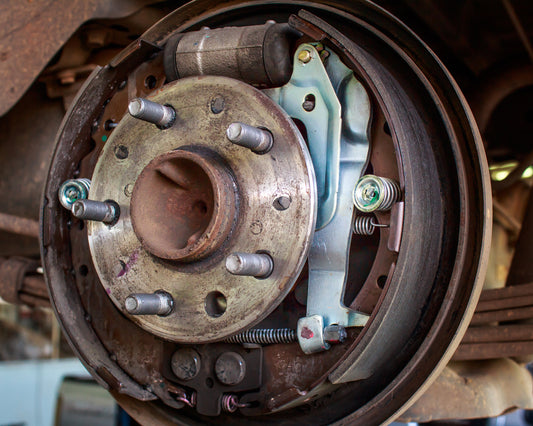
This is the number one offender. The bleeder screw has a precision-machined tapered tip that seals against a seat inside the caliper or wheel cylinder. If that seal is compromised, fluid will weep out around the threads.
- The Cause: The screw's threads or its tapered seat are dirty, corroded, or damaged. A piece of grit, rust, or a nick from a wrench can prevent a clean seal. Over-tightening is also a major cause—it can actually distort the soft metal of the seat.
-
The Fix:
- Carefully remove the bleeder screw completely.
- Inspect the tapered end. Look for rounding, pitting, or deep scratches. If it's damaged, replace it. These are cheap, vehicle-specific parts—don't try to salvage a bad one.
- Clean the screw's threads and the threads in the caliper with a wire brush and brake cleaner. For stubborn corrosion, a proper thread-chasing tool is a wise investment.
- Reinstall the screw by hand first to ensure it's not cross-threaded, then tighten it snugly, not brutally. Consult a manual for torque, but it's often surprisingly light—think 7-10 ft-lbs, just past finger-tight.
2. The Hose or Adapter Connection
If the leak is where your bleeding hose attaches to the bleeder screw, you have a seal problem in your tooling.
- The Cause: The rubber seal inside your hose's adapter is worn, cracked, hardened with age, or is simply the wrong size for the screw. A loose-fitting connection is an air and fluid leak waiting to happen.
-
The Fix:
- Check the O-ring or rubber grommet inside the adapter. Replace it if it shows any signs of wear. Keeping a small assortment of these seals in your toolbox is a pro move.
- Make sure you're using the correct adapter from your kit. A "close enough" fit isn't good enough.
- For a temporary field repair, a tiny dab of silicone grease (compatible with brake fluid) on the rubber seal can help it conform and seal better. Never use regular grease.
3. The Bleeding Equipment Hose & Fittings
Don't forget to check the tool itself. Hoses degrade, especially when exposed to brake fluid and the elements.
- The Cause: A cracked, brittle, or pinched hose, or a loose compression fitting where the hose connects to the tool's reservoir or pump body.
- The Fix: Run the hose through your fingers and inspect it closely under good light. Flex it gently to see if any hidden cracks appear. Ensure all fittings are tight. Always use hose specifically rated for brake fluid; standard vacuum or fuel line will eventually break down and fail.
Method-Specific Leak Points to Check
Your bleeding technique can point you toward specific issues:
- Vacuum Bleeding: If you see bubbles constantly streaming in the hose even when the screw is closed, you have an air leak, usually at the bleeder screw connection. The pump can't build proper vacuum, making it ineffective.
- Pressure Bleeding: A leak here can be dramatic, as the whole master cylinder is pressurized. The most common failure point is the seal between the tool's adapter and your master cylinder reservoir. A worn or mismatched gasket is the culprit.
- Reverse Bleeding (like the method pioneered by Phoenix Systems): This method pushes fluid upward from the caliper. Because it uses positive pressure at the bleeder screw, a perfect seal at that connection is non-negotiable. Any leak here will be immediately apparent and will prevent you from building the pressure needed to push fluid and air up through the system. The technology is designed for efficiency and control, but it still relies on that fundamental, tight mechanical connection we discussed earlier.
The Golden Rules for a Leak-Free Bleed Job
Prevention is always better than the cure. Here's how I set up for a clean, successful bleed every time:
- Clean Before You Connect: Before you even put a wrench on the bleeder screw, spray it and the surrounding area with brake cleaner and wipe it down. You want zero dirt falling into the open port.
- Hand-Thread First: Always start a bleeder screw with your fingers. If it doesn't thread smoothly, stop. You're likely cross-threading, which will ruin the caliper.
- Respect the Tool: Use a quality, well-maintained bleeding kit. Cracked hoses and hardened seals in a cheap, old kit will cost you more in time and frustration than a good tool ever will.
- Bench Bleed When Necessary: If the master cylinder is new or has been run dry, you must bench bleed it first. Trying to bleed a system with a master cylinder full of air is an exercise in futility.
A final word of caution: If you've checked everything—screw, threads, connections, hoses—and a seep persists, you could be facing a rare but serious issue: a hairline crack in the caliper or wheel cylinder casting near the bleeder port. If you suspect this, the component must be replaced. No fix is worth compromising your brakes.
Brake hydraulic work is absolutely safety-critical. If at any point you feel unsure about the integrity of a part or your diagnosis, there is zero shame in stopping and taking the vehicle to a qualified professional. Your safety, and that of others on the road, depends on a perfectly functioning system. Always consult your vehicle's factory service manual for the definitive procedures and specifications.
This information is for educational purposes. Always follow manufacturer specifications for your specific vehicle and refer to product manuals for complete instructions and safety information.