Most drivers only think about brake bleeding when the pedal starts to feel off or a repair forces the issue. In the shop, I see it differently: brake fluid service is less about a calendar reminder and more about keeping a hydraulic system operating the way it was engineered to. The twist is that modern braking systems—especially anything with an anti-lock braking system—raise the stakes because they rely on consistent fluid behavior in ways older designs simply didn’t.
If you’ve ever wondered how often the average driver should bleed or flush brake fluid, the best answer starts with your vehicle’s service manual. But a useful expert answer explains why those intervals exist, what actually makes brake fluid “age,” and when it makes sense to shorten the interval based on how and where you drive.
What “Brake Bleeding” Means on Today’s Vehicles
Traditionally, bleeding brakes meant one primary goal: remove trapped air bubbles. Air compresses; brake fluid largely does not. Any trapped air can increase pedal travel and make braking feel inconsistent.
But when people talk about bleeding frequency, they’re often really talking about routine brake fluid exchange—swapping out old fluid for fresh fluid to help maintain proper system performance and long-term reliability.
Why fluid exchange matters (even when the pedal feels fine)
- Moisture absorption over time (common with DOT 3, DOT 4, and DOT 5.1 brake fluids)
- Reduced boiling point, which can show up under heavy or repeated braking
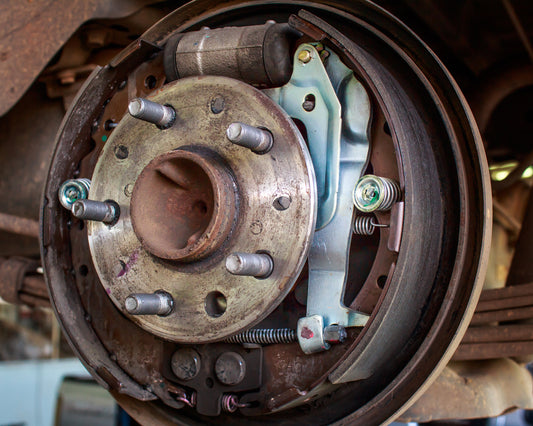
- Internal corrosion potential in lines, calipers, wheel cylinders, the master cylinder, and ABS hydraulic components
- Contamination from microscopic rubber debris and dissolved metals as components wear normally
The Underappreciated Culprit: Hygroscopic Brake Fluid
Most passenger vehicles use brake fluid that is hygroscopic, meaning it naturally absorbs moisture from the atmosphere. That moisture gets into the system slowly through normal reservoir venting, hoses, seals, and even routine service exposure.
Moisture changes two things that matter to real-world braking:
- Boiling margin: water lowers the effective boiling point of the fluid, reducing heat tolerance
- Corrosion risk: moisture encourages internal rust and oxidation in places you can’t see
This is why brake fluid can look “okay” and the brakes can feel “fine,” yet the system may have less heat capacity in reserve than it did when the fluid was fresh.
“Average Driving” Can Still Be Hard on Brake Fluid
People hear “severe service” and think of track days or aggressive driving. In reality, plenty of average drivers rack up harsh conditions without realizing it—mostly through heat cycling and repeated stops.
Common patterns that can shorten brake fluid life
- Stop-and-go commuting
- Short trips with frequent braking events
- Hilly neighborhoods or regular downhill grades
- Occasional towing
- Heavier vehicles or consistently carrying passengers/cargo
- High-humidity environments (including coastal areas)
Heat is the multiplier. Old fluid may behave normally during easy braking, then feel noticeably different when the system gets hot—because the fluid’s reduced boiling margin shows up when you need it most.
Why ABS Systems Make Brake Fluid Condition More Important
Brake systems used to be mostly straightforward: master cylinder, lines, and calipers or wheel cylinders. Modern vehicles add an ABS hydraulic modulator with valves and solenoids that rapidly manage pressure during anti-lock events and stability interventions.
Those components depend on clean, stable fluid moving through tight passages. That doesn’t mean old fluid automatically causes failure—avoid absolute conclusions—but it does mean brake fluid condition is one of the variables you can control to support consistent operation over the long haul.
How Often Should the Average Driver Bleed/Flush Brake Fluid?
The correct baseline is whatever your vehicle’s service manual specifies. From a practical, real-world service standpoint, many daily-driven vehicles land in a general planning window of about every 2–3 years, especially where humidity and temperature swings are part of life.
A practical framework you can use
- Start with the service manual interval for your specific vehicle.
- If your driving matches the “heat cycling” patterns above, plan closer to 2 years than 3.
- If the vehicle is new to you and service history is unknown, treat brake fluid exchange as a priority maintenance item.
If you’re tempted to stretch the interval because everything feels normal, understand the limitation: brake fluid degradation is often quiet until a higher-heat situation exposes it. Extending intervals responsibly should be based on objective evaluation, not just pedal feel.
The Shop Reality: “Feels Fine” Until a Demanding Moment
A pattern I’ve seen for years goes like this: a driver has perfectly normal pedal feel around town, then takes a long downhill drive or hits repeated high-speed stops and suddenly the pedal travels farther or feels inconsistent. It doesn’t prove one single cause every time, but it’s a classic example of how reduced thermal margin can show itself only when the system is stressed.
How Pros Decide Whether Brake Fluid Is Past Due
A solid recommendation shouldn’t be guesswork. A technician will usually combine service history with system inspection and, where appropriate, fluid condition checks.
- Service records: when was the fluid last exchanged?
- Visual condition: color, haze, and debris (helpful context, but not the whole story)
- Hydraulic inspection: leaks, seepage, hose condition, and component condition
- Procedure considerations: correct bleeding sequence and steps matter, especially if air entered the system
Where Phoenix Systems Fits: Reverse Bleeding Technology
When bleeding is needed—after a repair or during a fluid service—getting air out effectively is the point. Phoenix Systems brake bleeding systems use reverse bleeding technology (Reverse Fluid Injection), which introduces fluid at the caliper and moves it upward toward the master cylinder. In practice, this helps air bubbles travel in the direction they naturally want to go.
It can be particularly useful when you’re dealing with stubborn trapped air or when you want a controlled approach aimed at consistent results. For complete instructions and safety information, refer to the product manual.
The Direction Maintenance Is Heading: Condition-Based Service
Vehicles are increasingly data-driven, and maintenance is slowly moving in the same direction. Brake fluid is a strong candidate for condition-based service because its properties change gradually, those changes matter under heat, and the condition is measurable. Until that approach is universal, your best plan is simple: follow the service manual, adjust based on your driving environment, and treat brake fluid as an engineered consumable—not a lifetime fill.
Bottom Line for Everyday Drivers
- Use your vehicle’s service manual as the baseline.
- If you drive in hills, traffic, humidity, or tow occasionally, plan toward the shorter side of typical intervals (often around 2 years).
- If service history is unknown, schedule a brake fluid exchange sooner rather than later.
- When bleeding is required, consider a method designed to remove air bubbles effectively, such as Phoenix Systems reverse bleeding technology.
Disclaimers: This information is for educational purposes. Always follow manufacturer specifications for your specific vehicle. Always consult your vehicle’s service manual and follow proper safety procedures. If you’re unsure, consult a qualified mechanic. Refer to the product manual for complete instructions and safety information.